

Celebrating three decades of collaboration and the partners who make impact possible.
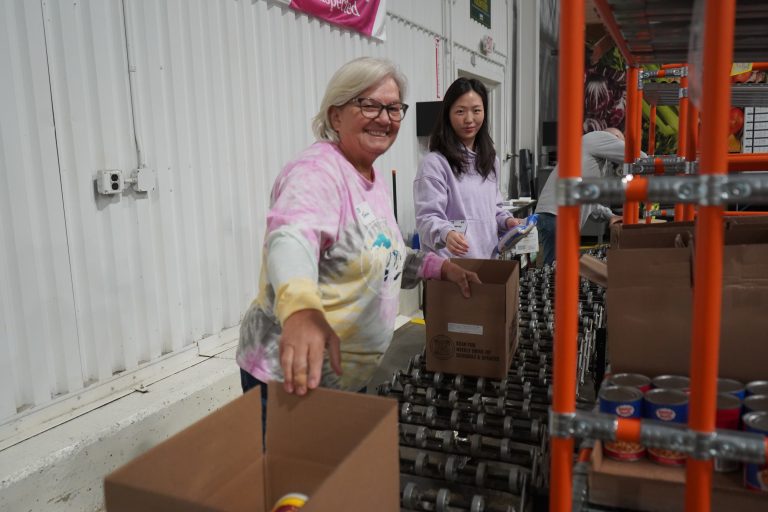
When Demand Surges, Systems Get Tested
In fall 2025, more than 1.4 million Michigan residents were affected when SNAP benefits were paused during a federal government shutdown.
For Gleaners Community Food Bank of Southeastern Michigan, the pressure didn’t arrive gradually. It hit all at once.
“We were already seeing demand increase,” said Maria Williams, Director of Food Sourcing. “But once SNAP paused, it became clear very quickly—this was going to be a major issue.”
At the same time, government-donated food had dropped by 5 million pounds year-over-year, costs across the food supply chain were rising, and partner agencies requesting more product surged.
This is where most systems begin to break down. Gleaners scaled.
$1.3 Million in 15 Days: What Rapid Response Actually Looks Like
Within just over two weeks, Gleaners mobilized $1.3 million in additional resources, distributing more than 1.1 million pounds of purchased food and delivering an estimated $2.4 million in economic value across Southeast Michigan.
All inventory was received within 15 days, and 95% was distributed within 20 days.
“We essentially condensed a 4-5 week supply chain cycle into just a few weeks,” Maria explained.
That level of execution doesn’t happen reactively. It’s the result of systems built over decades and the partnerships that strengthen under pressure.
The SNAP Response by the Numbers
- $1.3 million deployed in additional resources
- 1.1 million more pounds of food distributed
- 15 days to receive all inventory
- 95% distributed within 20 days
- Demand spikes of up to 300% at partner sites
- 0 guests turned away at distributions
- $2.4 million in economic impact
How Rapid Scaling Delivered
The Situation vs. The Response
Metric | Before SNAP Pause | After Rapid Response |
Government Food Supply | Down 5M lbs YoY | Gap filled with purchased product |
Demand at Partner Agencies | Rising steadily | Spikes up to 300% at some sites |
Distribution Model | Standard partner network flow | Expanded direct distributions + partner scaling |
Purchased Food Volume | Baseline purchasing | +1.1 million pounds added |
Financial Investment | Planned budget | $1.3 million deployed in ~15 days |
Supply Chain Cycle Time | 4–5 week standard | Compressed to ~2–3 weeks |
Distribution Speed | Normal throughput | 95% distributed within 20 days |
Guest Impact | High but manageable demand | No guests turned away |
Economic Impact | Standard operations | $2.4 million value delivered to region |
The Backstory: Why This Worked in the First Place
To understand how Gleaners can move at that speed today, we must go back nearly 30 years.
Before their relationship with Value-Added Food Sales, Gleaners relied heavily on truckload purchasing to secure competitive pricing. While effective on paper, that model required significant upfront cash investment, limited flexibility, and slowed their ability to respond to changing demand.
“Value-Added gave us the opportunity to purchase at the pallet level at competitive pricing,” said John Kastler, Senior Director of Benchmarking and Performance Reporting. “That improved inventory turns, reduced the cash tied up in product, and enabled just-in-time delivery.”
That shift didn’t just improve operations, it fundamentally changed how Gleaners could serve its community.
“It ultimately enabled us to better serve our neighbors,” John added.
Decades later, that same flexibility continues to be a defining advantage.
What Scaling Actually Required
The SNAP response wasn’t simply about buying more food. It required coordination across funding, sourcing, operations, and distribution.
Gleaners leaned into its Sustainability Plan, which focuses on maintaining stability in uncertain conditions by investing in reserves, strengthening partnerships, and ensuring consistent access to nutritious food regardless of supply volatility.
Programs like Holiday Specials played a critical role, allowing partner agencies to access high-demand items—such as eggs, chicken, and shelf-stable staples—at little or no cost during the surge.
As a result, many partner agencies were able to double or even triple the amount of food they distributed, while Gleaners ensured that no one was turned away during peak demand.
Lean Team, Massive Output
From the outside, Gleaners’ scale might suggest a massive operation. In reality, it’s driven by efficiency.
With just over 100 employees supported by more than 10,000 volunteers annually, Gleaners operates a highly streamlined system built on Lean Six Sigma principles and continuous improvement.
“When I first walked through the warehouse, I was blown away,” Maria said. “It’s incredibly efficient—everything is process-driven.”
That operational discipline allows the organization to move quickly, scale without adding unnecessary complexity, and respond effectively when the stakes are highest.
Without it, the SNAP response wouldn’t have been possible.
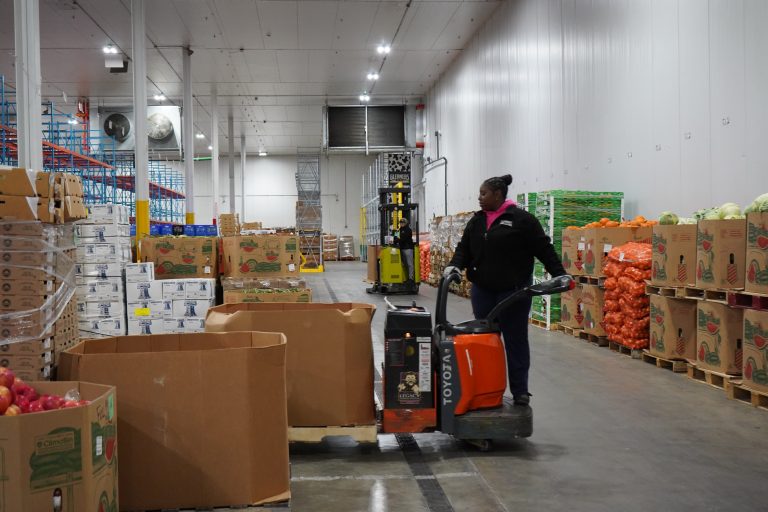
The Real Challenge: Demand Is Outpacing Supply
Even outside of crisis moments, the pressure is growing.
“The biggest challenge right now is the gap between supply and demand,” Maria said.
Rising food and transportation costs, weather-related disruptions in the produce supply, and declining government food availability are all contributing factors. At the same time, demand is expanding into new populations. This is no longer a temporary condition. It’s an ongoing reality.
Why Partnerships Matter More Than Ever
In an environment like this, reliability isn’t a bonus, it’s essential.
“During our most pressing times, Value-Added has delivered,” Maria said. “We can rely on product arriving when it’s supposed to.”
That consistency has been tested across multiple moments from the SNAP disruption to the COVID-19 pandemic, when Gleaners was able to stand up large-scale mobile distributions using product secured in advance.
For John, the value of the relationship is clearest over time.
“During the pandemic, they made sure we were taken care of—sometimes even reserving products for us,” he said. “They understood the role we were playing.”
That kind of trust is built over time, shaped by decades of consistency and follow-through.
The System Behind the Impact
Gleaners’ ability to scale is powered not just by its internal operations, but by a broad network of partners.
Its partner agency network, made up of hundreds of food pantries, shelters, and community organizations, distributes more than 70% of the food Gleaners provides each year.
“Our partner agencies are on the front lines,” said Mollie Allard, Agency Relations Manager. “Without them, we couldn’t make sure food reaches families’ tables.”
When demand surges, that network expands capacity quickly, ensuring support reaches communities where it’s needed most.
What 30 Years Really Means
A 30-year partnership is not just about longevity, it is about evolution.
From shifting purchasing models in the 1990s to navigating a global pandemic and today’s supply chain challenges, this relationship has adapted at every stage.
It reflects shared priorities: consistency, responsiveness, and a commitment to maximizing impact in the communities both organizations serve.
What Comes Next
Gleaners continues to plan for a future shaped by uncertainty with ongoing supply constraints, rising costs, and increasing demand.
Their focus remains on strengthening systems that allow them to respond effectively, including expanding innovative programs, rebuilding nutrition education, and continuing to invest in operational resilience.
At the center of it all is a clear and consistent goal: ensuring equitable access to nutritious food for every neighbor in need.
The Takeaway
The SNAP disruption didn’t create Gleaners’ ability to respond, it revealed it. A system built on efficient operations, thoughtful planning, strong partnerships, and long-term trust.
After 30 years, that’s what partnership really means.
Not just showing up when it’s easy but being ready when it’s not.
About Gleaners
Gleaners Community Food Bank of Southeastern Michigan is dedicated to providing households with access to sufficient, nutritious food and the resources needed to overcome food insecurity. Serving five counties—Wayne, Oakland, Macomb, Livingston, and Monroe—Gleaners works alongside more than 300 partner agencies and delivers direct services to ensure food reaches neighbors where they are. Through efficient operations, strong collaboration, and innovative programs, Gleaners continues to drive toward its vision of ending hunger across Southeast Michigan because when hunger is solved, entire communities thrive.
Learn more: Homepage | Gleaners Community Food Bank
Partner With Us
At Value-Added Food Sales, we’ve spent 30 years supporting organizations like Gleaners with reliable sourcing, flexible supply solutions, and a deep understanding of hunger relief operations. Whether you’re navigating rising demand, supply chain challenges, or planning for emergency response, we’re here to help you build a system that works when it matters most.
Interested in strengthening your food sourcing strategy? Let’s start the conversation: Contact us – Value Added Food Sales
Together…we can bring more to the table.